- Proudly Caring for VETERANS
- To the Point Healthcare2186 Lynn Rd
Suite A
Columbus, NC. 28722828-817-4734 Monday - Friday 9am - 6pm
Weekend and Evening hours available on requestVisit our Facebook page

- Testimonials
Love Cynthia….i have only had 2 sessions thus far & the second session was great…it helped me so much cause she actually listened to my concerns & our plan of care this week helped so much…the week before (my first session) was not as dramatic as i anticipated but think that had mostly to do with my own state of mind…Cynthia is a kind & caring provider & i trust her with helping me achieve all of my health goals…i... Read more »
These treatments have really effected my life in a positive way. Also very enjoyable and relaxing! Thank you! Jennifer C. 7/15/2016
I had a wonderful experience and successful outcome at To The Point Healthcare. Cynthia is kind, knowledgeable and proficient. I would not hesitate to recommend her to friends and family. Geri L 11/17/2016
The first time I came I had back and heart issues, also poor circulation. So much so I looked like a ghost. Cynthia has brought my color back thru better blood circulation and I feel so much better. Thanks so much Cynthia. James Jones 8/26/2016
After several visits I know I am in the very competent hands of a caring health provider. Cynthia’s approach treats the whole person, which makes so much sense. My sinus and other problems are clearly improved and I am now aware of various ways I can work on improving my overall health and immune system. I am grateful to the kind person who recommended Cynthia to me! Pat G. 11/28/2016
Cynthia is a great listener, which, I believe, to be THE critical issue missing in quality health care. Her ability to listen makes her ability to provide the optimal treatment for your particular issue. Highly recommend! Leah R. 6/2016
I signed up for the acupuncture treatment and I was super satisfied with the results. I was expecting it to be something that would hurt because of the use of needles however, this is not the case I actually enjoy getting treatments. Cynthia is amazing at what she does and she always makes me feel comfortable and relaxed! I highly recommend To the Point Healthcare it has been a big part of my recovery. Kayla R 1/2017
Was a very pleasant experience. Felt a difference after treatments. Would recommend to anybody who has these type of problems. Reggie D 8/19/2015
After only one visit, the pain and soreness I’ve been dealing with for over 5 months is remarkably better! Cynthia took as much time as I needed and answered all my questions and concerns. 3/9/2015
Cynthia’s calming nature put me at ease from the time she began the initial examination through the entire treatment. Explanations were clear and questions were answered expertly. I enjoyed the treatment room as it offered soft music and décor that was relaxing. The sensation of needle insertion was minimal and the session was ended by a wonderful shoulder massage and use of the cupping technique. I was given instructions to be kind to myself, which I followed exactly as I... Read more »


acupuncture
Herbal Tonics for Allergies
 An allergy occurs when your immune system reacts to a foreign substance, called an allergen. This could be anything from something you inhale to something you touch to something you eat. An allergic reaction may cause sneezing, coughing, watery eyes, a running nose, a sore throat and rashes. In severe cases, allergic reactions can induce something known as anaphylactic shock, which can actually be deadly. continue reading
Five Reasons to Get Acupuncture for Allergies
 Allergies, seasonal or otherwise, is one of the biggest health issues people deal with in the United States. And the numbers are rising every year. Part of this is because our agricultural practices have changed drastically in the past 40 years and our bodies are not accustomed to dealing with genetically modified foods or the excessive amounts of pesticides now being put in and on our food. We are also being over-medicated with antibiotics used in livestock we eat and that we are prescribed by our own doctors. This has created superbugs like MRSA that no longer responding to antibiotics. Our immune systems just can’t keep up. So every year, the number of people experiencing allergies is increasing. continue reading
Five Acupuncture Points for Spring
Spring is the season of growth, regeneration, increased activity and new beginnings. During the season of spring, people experience many changes. Allergies, high blood pressure, headaches, sinus pain and congestion, anger, irritation and tendon problems are just some of the issues common to the spring months. Many of these problems can be attributed to increased wind in the environment. And while there is nothing that can be done about external wind, internal wind can be addressed and diminished using Traditional Chinese Medicine (TCM) and the many modalities it incorporates. continue reading
Mental/Emotional Aspects of The Heart
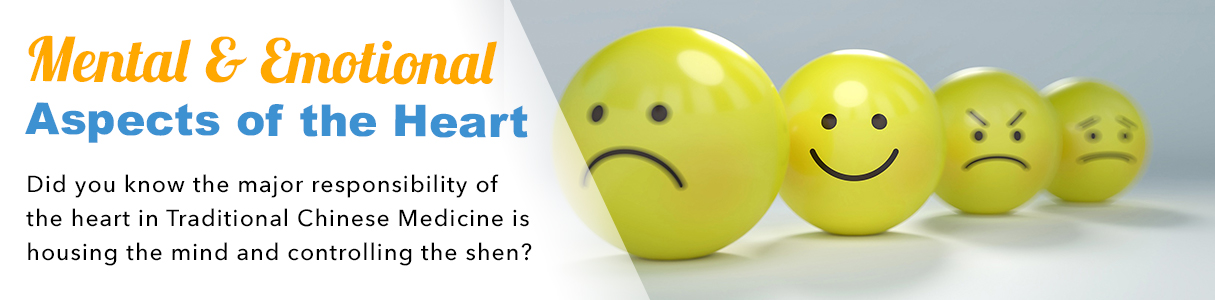
The major responsibility of the heart in TCM is housing the mind and controlling the shen. “Shen” can be seen as the overall healthiness of the mind. When you look at a healthy person in good spirits, you know how you can see that in their eyes? There is a certain bright clarity and sense of health that shines from within. We acupuncturists would say that this person has good shen. continue reading
Physical Aspects of The Heart
 In Traditional Chinese Medicine, the heart is the organ most closely linked to emotion. Think about all the terms we use every day to describe our state of mind: “heartsick,” “heartbroken,” “heartache” The heart is not the director of subtlety; the emotions it encompasses seem to always be on the far end of the spectrum, either extreme sadness or extreme joy. continue reading
Auricular Acupuncture
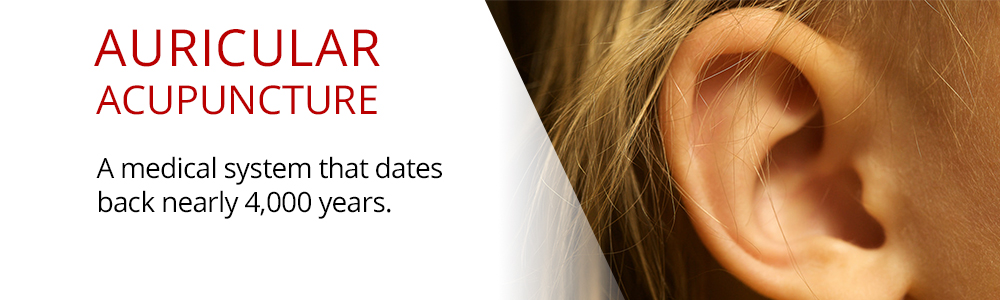
Traditional Chinese Medicine is a medical system that dates back nearly 4,000 years. Auricular acupuncture was first mentioned around 500 B.C. in the Yellow Emperor’s Classic of Internal Medicine, which is the equivalent of the Bible for TCM practitioners. However, the method in which auricular acupuncture is practiced today is actually based upon discoveries that occurred in France in the 1950s. Modern auricular acupuncture is based upon the work done by Dr. Paul Nogier of France.
Auricular acupuncture is the stimulation of the external ear for the diagnosis and treatment of health conditions. These health conditions may be taking place anywhere throughout the body. The stimulation of these acupuncture points can be done manually, with an acupuncture needle, a laser, magnets or ear seeds. Regardless of the means of stimulation, auricular acupuncture can be a very powerful addition to regular acupuncture treatments.
The current form of auricular acupuncture came about after Dr. Nogier noticed a scar on the upper ear of some of his patients. When he inquired about the scar, he found out a local practitioner had been treating his patients for sciatica pain and she was cauterizing this specific area on the external ear to relieve their low back pain. Dr. Nogier conducted similar tests on his own patients and found their low back pain was also relieved. He tried using other means of stimulation as well, such as acupuncture needles and found it to be just as effective as cauterizing the area. So Dr. Nogier theorized if an area of the upper external ear is effective on treating low back pain, then perhaps other areas of the ear could treat other parts of the body. This led to the model now used when teaching auricular acupuncture. The ear is thought to represent the whole anatomical body. However, it is upside down in orientation, so the head is represented by the lower ear lobe, the feet are at the top of the ear and the rest of the body is in between. According to history, the Chinese actually adopted this model of auricular acupuncture in 1958.
Auricular acupuncture is considered a microsystem, in that the ear is like a microcosm of the whole body, meaning one part of the body, the ear in this instance, represents the whole body. Microsystems also appear on foot and hand reflexology, facial acupuncture and scalp acupuncture.
This system has been practiced in Asia, albeit in a different form, for over 2,000 years. Auricular acupuncture has been used in Europe for the past 40 to 50 years. And it is finally starting to take root in the United States. The U.S. military, over the past 5 to 10 years, has started utilizing auricular acupuncture for its battlefield personnel. This form of battlefield acupuncture is used to help soldiers deal with PTSD (post-traumatic stress disorder) brought on by being in combat.
Since auricular acupuncture allows for every part of the external ear to connect through the microsystem to every part of the body, many conditions can be treated using only a few very tiny needles. Not only can PTSD be treated using auricular acupuncture, but also things like chronic pain, drug addiction, high blood pressure and nausea. And for those who are a little needle-shy, auricular acupuncture is a great way to treat them because they will never see the needles and they will still get the help they need to achieving health and wellness.
Photo credit: Ear – Travis Isaacs | CC 2.0
The Bladder in Chinese Medicine
In Traditional Chinese Medicine, the bladder is one of the six yang organs, paired with one of the six yin organs. The yin organs store vital substances (such as Qi, blood, yin, and yang), whereas the yang organs are more active and have a function of constantly filling and emptying. The bladder is a perfect example of a yang organ. Its main physiological function is to remove water from the body in the form of urine. To do this, the bladder uses Qi (energy) and heat from its paired yin organ, the kidneys. continue reading
Positive Side Effects of Acupuncture
During an initial session of acupuncture, most practitioners began with an extensive health intake that goes over all of the systems in the body. We use this to determine certain patterns of imbalance, allowing us to treat the root cause of issues. This is one way we differ from Western medicine. continue reading
Acupuncture and Alcohol Detoxification
 Alcoholism affects nearly 16 million adults in the United States, yet only approximately 1.5 million Americans actually seek and get help to deal with their addiction. According to the National Center for Statistics and Analysis, nearly 88,000 people die from alcohol-related deaths every year, which makes alcohol the fourth leading preventable cause of death in the United States. After all the research that has been done on alcohol, people in the United States are still dying from something completely legal. And ultimately, we are paying for it, not just with our lives, but also with our tax dollars. continue reading
Acupuncture and Cervical Health
Women’s health is a big part of the healthcare industry. And acupuncture can be very beneficial in caring for the overall health of women. Acupuncture has been especially effective in helping with things like infertility, turning breech babies, inducing labor and clearing up infections. The cervix is just one small part of the uterus. Specifically it is the lower part of the uterus that opens to allow passage between the uterus and the vagina. The cervix widens during childbirth to allow the baby to pass, it also allows the passage of menstrual fluids from the uterus out of the body and it is vital for sperm to pass through the cervix to reach the uterus when trying to procreate.

The cervix is very vulnerable to several health conditions, such as chronic inflammation, polyps, dysplasia and even cancer. Cervical conditions rarely present symptoms in the early stages, which makes it extremely important for women to get regular pap smears. If an abnormality is detected, there are several ways to address it, depending on the severity. In the early stages of any of the aforementioned conditions, acupuncture can be a positive addition to Western medical treatments. Acupuncture is very good at decreasing inflammation and helping to dissolve polyps and tumors. Acupuncture can also balance hormones, which allows the body to correct any imbalances.
One of the most studied areas of acupuncture is in treating fertility issues. When invitro fertilization by itself does not get the job done, adding acupuncture may be the last piece of the puzzle. Acupuncture does much more than just balance the hormones. When a woman is trying to get pregnant and struggling with it due to fertility issues, the stress levels are extremely high. And high stress levels have been proven to disrupt the body’s ability to conceive. One of the things that acupuncture is really successful at is decreasing stress levels. This can make it easier for the fertility treatments to work. Acupuncture has also been shown to increase blood flow to areas of the body, including the uterus. This can help to make a very hospitable place for a baby to grow.
Acupuncture and traditional Chinese medicine are also widely used for treating infections and sexually transmitted diseases. In traditional Chinese medicine, most infections have some sort of heat or discharge associated with them. This medicine uses principles, herbs and acupressure points that have specific properties that can drain heat and expel toxins from the body. This can lead to an overall improvement in both uterine and cervical health.
Another area where acupuncture can help with cervical health is at the time of birth. About four percent of babies are presented in the breech position prior to birth. An accessory modality known as moxibustion, has proven time and time again, that it can actually turn the baby to the proper birthing position. Moxibustion involves the burning of an herb, dried mugwort, very near the skin on a specific acupressure point that is located on the outer edge of the pinky toe. By performing moxibustion several times a day, the baby and the body somehow know that there needs to be a repositioning and the baby tends to turn during the night.
When it comes to women’s health, acupuncture is an amazing resource. Contact us to schedule your appointment today.